A Danish company with its own truck fleet and thin margins wanted a grounded answer to one question: which trucks, if any, should go electric first?
98.7%of 50,000 simulated futures show a positive return on the first two trucks
205.8 tCO2 a year projected saved by those two trucks
28%more accurate cost forecast, tested on 47 truck-months of real diesel spend
The problem
Replacing trucks is a big investment, and guessing from fleet averages is risky. Each truck drives different routes and stops overnight in different places.
What we built
- A model built on 18 to 28 months of telematics per truck, GPS history and the company's own cost data
- A truck-by-truck roadmap, a charger capacity check and a scenario simulator
- A risk analysis across 50,000 simulated futures for fuel, power and truck prices
The result
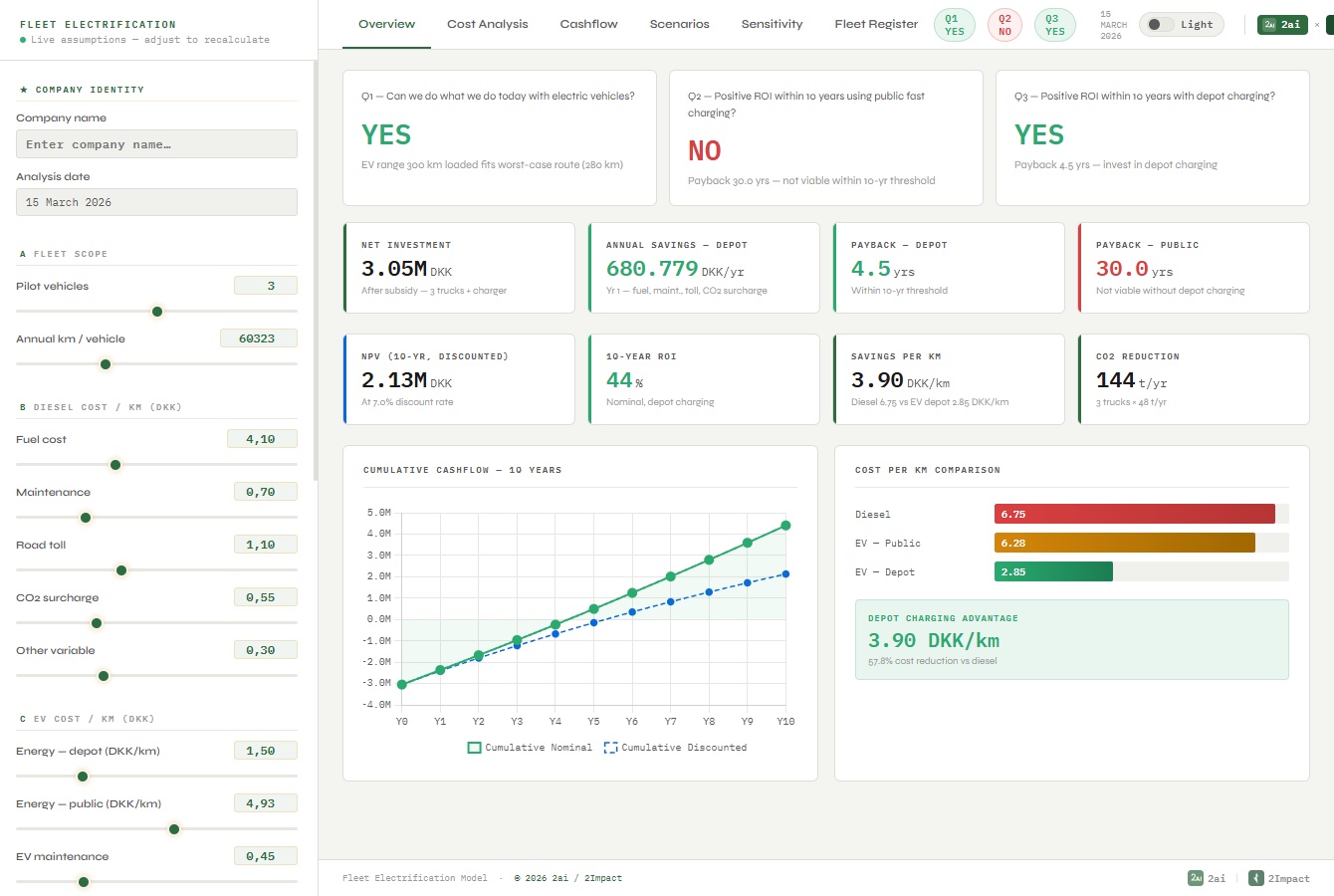
Two trucks come out first, with a projected first-year saving of about DKK 758,000. 79% of overnight stops are within 50 km of a company site, and the existing depot can charge the first two trucks without new grid capacity. Next step: a real-world trial before purchase.
Most EV business cases stop at comparing diesel and electric cost per km. This one matched every truck against the orders it has to deliver, the driving-time rules it has to follow, and the overnight stops and depots on its real routes. That is why the trucks picked first can take real orders on electric power.
Figures marked as projected come from our model, not from measured results.